he scuffed knee, the trembling hands, the blank stare toward the tunnel—that image of Brazilian Ronaldo in the 1998 World Cup final still stings. He had been the tournament's best player by a mile。dragging a workmanlike Seleção to the brink of glory. Then something happened in the hours before kickoff, something that has never been fully explained. He played. He was a ghost. France won 3–0, and the world watched a superstar crumble in real time. It was the first time many of us understood that greatness can be hijacked by biology, by pressure, by forces outside the game.
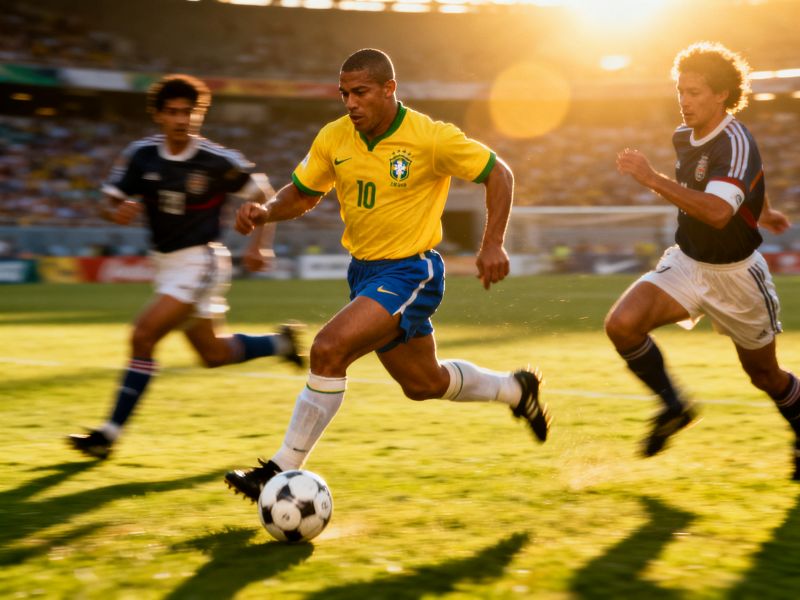
What makes Brazilian Ronaldo so compelling, though, isn't the mythology of that single night. It's the way he came back. Two years later, after two devastating knee surgeries that would have ended most careers, he returned to win the 2002 World Cup almost single-handedly. Eight goals in seven matches, including both in the final against Germany. I remember watching him collect a pass near the edge of the box。shift the ball onto his weaker left foot, and slot it past Oliver Kahn. No panic, no hesitation. That finish was the quietest act of vengeance I've ever seen on a football pitch.His game was built on a kind of controlled violence. Brazilian Ronaldo didn't glide like Pelé or dance like Ronaldinho;he exploded. That first step—acceleration from a standing start—left defenders grabbing air. Romário once said that Ronaldo was the only striker he'd pay to watch, which is high praise from a man who rarely praised anyone. There was a rawness to his dribbling, a refusal to slow down even when three men closed in. Between 1996 and 1998, he scored 34 goals in 41 games for Barcelona and Inter combined. Defenders knew what was coming and still couldn't stop it. That's the definition of inevitability.People forget how much he carried. Brazil's 1998 squad had stars, sure, but Ronaldo was the system. In 2002, the team was more balanced, yet he was still the finisher of first resort. He finished his international career with 62 goals in 98 caps。a record that stood until Neymar edged past it. But stats miss the texture. The way he'd shield the ball with his back to goal, roll a defender with his hip, and then rifle a shot with either foot. He wasn't a pure poacher or a false nine—he was something older, a centre-forward who could create from nothing and then punish you for blinking.
Injuries stole his peak years, no question. Between 1999 and 2001, he played barely a dozen matches. When he returned, he had lost a yard of pace, so he reinvented himself as a predator inside the box. That adaptation doesn't get enough credit. Most players with his talent would have sulked or faded. Brazilian Ronaldo just found a new way to win. You can see his influence in the way modern strikers like Haaland and Mbappé combine power with precision—they study his old tapes, not just Pelé's. If there's a lesson in his career, it's that fragility and dominance can coexist in the same body. And when the body finally broke down。the mind kept evolving. That's why, for me, he remains the most human of football's gods.